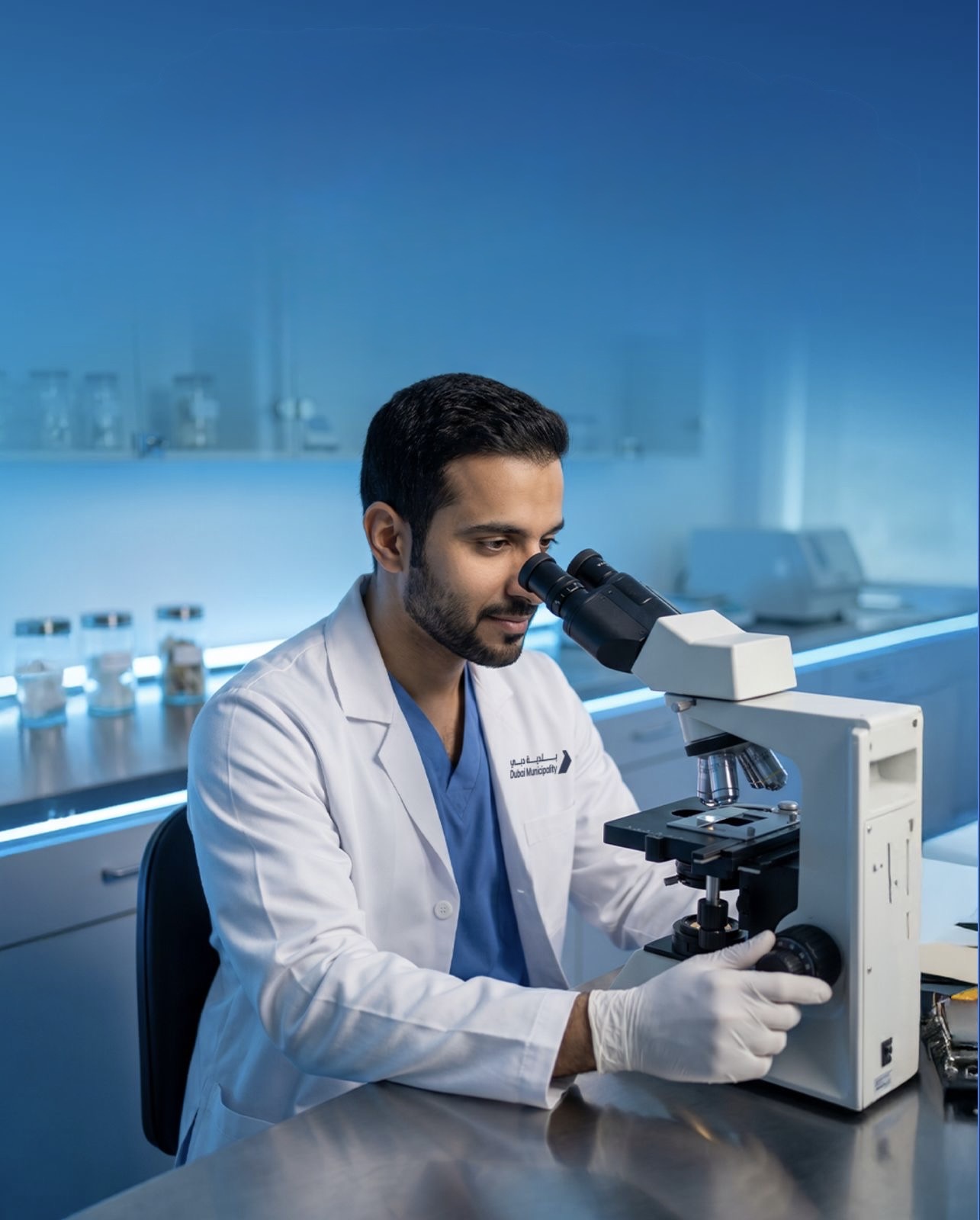
Food safety nanoparticle detection laboratory launched.
17 June 2026
Dubai Municipality launches nanoparticle detection laboratory for food products to enhance Dubai’s leadership in food safety
- Advanced specialised testing system to detect titanium dioxide in processed food products using the latest laboratory technologies
- Test results issued in record time not exceeding five minutes, reflecting the efficiency and quality of Dubai Municipality’s laboratory testing services
- Proactive step to enhance food safety, market product quality, and regulatory oversight across the food sector
- Keeping pace with global developments and expanding the use of proactive testing in laboratory analysis, food manufacturing, and modern food applications
Dubai, United Arab Emirates, 17 June 2026: Dubai Municipality has launched a nanoparticle detection laboratory for food products using ICP-MS technology, operating under an advanced and specialised testing system designed to accurately detect titanium dioxide in processed food products. The laboratory can issue test results in record time not exceeding five minutes, further enhancing Dubai’s leadership as a pioneering hub for developing and applying globally recognised standards in laboratory testing and calibration certification.
The launch forms part of the ongoing efforts of Dubai Central Laboratory, affiliated with Dubai Municipality, to develop a specialised laboratory testing ecosystem and strengthen its technical and technological capabilities. It represents a proactive step to enhance food safety, improve the quality of products available in the market, and strengthen regulatory oversight across the food sector. It also supports the system’s readiness to respond to rapid developments in the food industry, particularly with the expanding use of nanotechnology in food manufacturing and in improving product characteristics such as colour, texture, and stability.
Eng. Hind Mahmoud Ahmed, Director of the Dubai Central Laboratory Department at Dubai Municipality, said that the launch of the nanoparticle detection laboratory for food products represents a qualitative addition to the specialised laboratory services offered by Dubai Central Laboratory. It reinforces the laboratory’s role as a reference centre supporting regulatory authorities and partners across the public and private sectors by providing advanced analytical solutions that respond to market needs and keep pace with technological developments.
Eng. Hind said: “The new tests rely on advanced analytical technologies that enable the precise characterisation of nanostructures through the measurement of particle size, distribution, and physical and chemical properties, with rapid completion times. This allows us to differentiate between traditional forms of titanium dioxide and forms manufactured at nanoscale sizes. These tests also enable the assessment of product compliance with approved technical specifications and requirements, supporting regulatory efforts and ensuring the safety of products traded in the market.”
She added that the development of the laboratory marks a starting point for broader research and applied fields that may, in future, include the cosmetics, pharmaceuticals, and packaging materials sectors. This promotes innovation in government services and supports the development of proactive solutions that assist authorities in formulating policies and legislation regulating the use of nanoparticles.
Dubai Central Laboratory reaffirms its commitment to continuously investing in the development of its laboratory infrastructure and national competencies. By anticipating future challenges in safety and quality, the laboratory supports Dubai Municipality’s vision of protecting public health and enhancing quality of life.
Previously, Dubai Municipality launched the “ViruGenetics” laboratory for the advanced detection of foodborne viruses using the latest genomic technologies. The facility, the first of its kind nationwide, reflects the Municipality’s continued commitment to strengthening the food safety system and adopting innovation in laboratory services.
The facility operates with a daily capacity of approximately 60 samples, which can be scaled up to 100 samples per day during emergencies. By completing tests and issuing results in record time, it contributes to accelerating regulatory procedures and supporting decisions based on accurate and reliable data.